

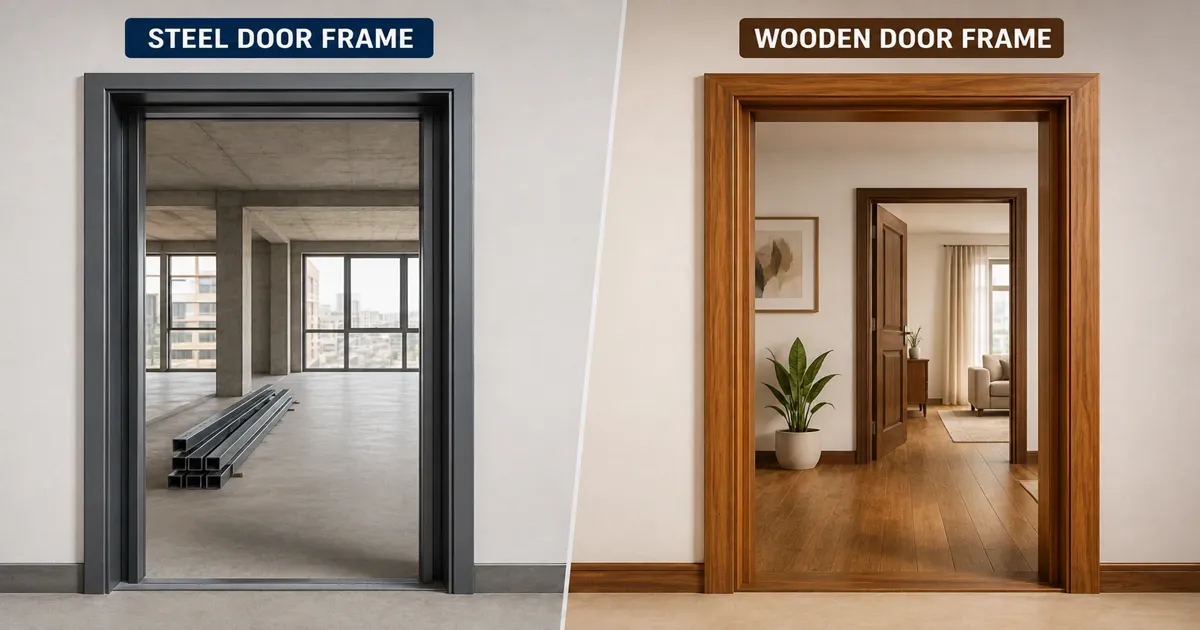
Choosing the right door frame is an important decision in any construction project. Whether it's a residential home, commercial complex, educational institution, healthcare facility, or industrial building, the door frame contributes to the structural integrity, functionality, and overall appearance of the space.
Today, builders and architects commonly choose between steel door frames and wooden door frames, each offering distinct advantages depending on the project's requirements.
Rather than asking which option is universally better, the more practical question is: Which door frame is better suited to your building?
The answer depends on several factors, including building type, door-opening size, moisture exposure, fire-safety requirements, maintenance expectations, design preferences, budget, and applicable building specifications.
This article compares Steel Door Frames vs Wooden Door Frames to help architects, contractors, developers, homeowners, and procurement teams make informed decisions.
The most fundamental difference lies in the material itself.
Steel Door Frames
Steel door frames are manufactured using formed mild steel sections designed to provide dimensional consistency and structural strength. They are commonly used in residential, commercial, institutional, and industrial buildings.
For example, Sambhv Steel Door Frames are manufactured from in-house mild-steel coils and are available as ready-made single and double steel door frames with thicknesses ranging from 1.4 mm to 2.5 mm, depending on the application.
Wooden Door Frames
Wooden door frames are manufactured from natural timber. Different wood species offer varying levels of strength, appearance, and durability. Wooden frames remain popular for projects where natural aesthetics are a key design consideration.
One of the key considerations in modern construction is long-term structural performance.
Steel door frames offer:
Because steel is manufactured under controlled processes, consistency is easier to maintain across large construction projects.
Wooden door frames can provide excellent performance when high-quality, properly seasoned timber is used. However, timber is a natural material and may be more susceptible to dimensional movement depending on humidity and environmental conditions.
Environmental exposure plays an important role when selecting door frames.
Steel Door Frames
Steel is not affected by termites, making it a suitable option in regions where termite activity is common. Proper protective coatings and installation practices also help improve corrosion resistance in appropriate environments.
Wooden Door Frames
Wood requires protection against termites and moisture. Depending on the timber species and site conditions, periodic treatment and maintenance may be necessary to preserve performance over time.
For projects located in humid or termite-prone regions, these considerations often become part of the overall material selection process.
Fire safety has become an increasingly important consideration in modern building design.
Steel itself is non-combustible, and steel door frames are commonly used as part of assemblies designed to support fire-resistant door systems where required by applicable building codes and tested specifications.
However, it is important to note that a door frame should only be described with a specific fire rating if it has been tested and certified accordingly.
Wooden door frames can also be used in buildings with fire-safety requirements, although the overall performance depends on the complete door assembly and applicable regulations.
Architects should always refer to project specifications and local building codes when selecting door systems.
Both materials require proper installation for optimum performance.
Steel Door Frames
Ready-made steel door frames are manufactured to predefined dimensions, helping achieve installation consistency on site. Proper alignment, anchoring, and finishing remain essential for reliable performance.
Wooden Door Frames
Wooden frames are generally familiar to carpenters and can be adjusted or modified during installation. However, careful handling is necessary to maintain dimensional accuracy and avoid damage during fitting.
The installation method should always align with the project's structural design and construction practices.
Maintenance expectations vary depending on the building type and operating environment.
Steel door frames may require periodic inspection and surface maintenance depending on the coating system, exposure conditions, and usage.
Wooden door frames may require additional attention over time, including repainting, polishing, sealing, or treatment against moisture and insects, depending on environmental conditions.
Neither option should be considered completely maintenance-free, as routine inspection contributes to long-term performance.
Aesthetics remain an important consideration for architects and homeowners.
Wooden Door Frames
Wood continues to be valued for its natural grain, warmth, and traditional appearance, making it a popular choice in residential interiors and premium architectural designs.
Steel Door Frames
Modern manufacturing techniques allow steel door frames to complement contemporary architectural styles while providing clean lines and uniform profiles. They can also be finished to suit different project aesthetics.
Ultimately, design preferences should align with the architectural intent of the building.
Sustainability has become an important factor in material selection.
Steel is widely recyclable and can be reprocessed at the end of its service life, supporting circular manufacturing practices.
Wood is a renewable material when sourced responsibly from certified forests. However, sustainability also depends on harvesting practices, treatment methods, and lifecycle considerations.
Many modern construction projects evaluate both materials as part of broader environmental and sustainability objectives.
Project budgets should consider more than initial purchase price.
Factors influencing total project cost include:
In some projects, wooden door frames may offer an economical solution, while in others, steel door frames may provide greater long-term value depending on operational requirements.
Evaluating lifecycle costs alongside project specifications often leads to better procurement decisions.
Steel Door Frames
Often selected for:
Wooden Door Frames
Commonly used in:
The most suitable option depends on the intended application rather than a single material being universally superior.
For projects requiring ready-made steel door frames, Sambhv Steel Tubes Limited manufactures single and double steel door frames using in-house mild-steel coils. The product range includes frame profiles manufactured in thicknesses ranging from 1.4 mm to 2.5 mm, supporting a variety of residential, commercial, and institutional construction requirements.
The company's integrated manufacturing approach helps maintain consistency in material quality , dimensional accuracy, and production standards while serving builders, contractors, developers, and channel partners across India.
The comparison between Steel Door Frames vs Wooden Door Frames is not about identifying a universally better material - it is about selecting the right solution for the specific building.
Wooden door frames continue to offer timeless aesthetics and remain well-suited for many residential and decorative applications.
Steel door frames provide dimensional consistency, structural reliability, resistance to termite damage, and compatibility with modern construction practices , making them an increasingly preferred choice across residential, commercial, and institutional projects.
By evaluating factors such as building type, moisture exposure, fire-safety requirements, maintenance expectations, installation methods, design preferences, and project budget, decision-makers can choose the door frame solution that best meets their project objectives.
1. Are steel door frames better than wooden door frames?
Neither is universally better. The right choice depends on the building type, design requirements, moisture exposure, fire-safety considerations, maintenance expectations, budget, and applicable building specifications. Both materials have advantages in different applications.
2. Are steel door frames termite-proof?
Yes. Steel is not affected by termites, making steel door frames a suitable choice for buildings located in termite-prone areas. However, proper installation and appropriate protective finishes remain important for long-term performance.
3. Can steel door frames be used in residential buildings?
Absolutely. Steel door frames are widely used in apartments, independent homes, villas, and residential developments, as well as commercial, institutional, and industrial buildings.
4. Are steel door frames fire-resistant?
Steel is a non-combustible material, and steel door frames are commonly used as part of fire-resistant door assemblies where required. Any specific fire rating should always be based on tested and certified door systems in accordance with applicable standards.
5. Who manufactures steel door frames in India?
Several companies manufacture steel door frames in India. Sambhv Steel Tubes Limited manufactures ready-made single and double steel door frames from in-house mild-steel coils, offering profiles in thicknesses ranging from 1.4 mm to 2.5 mm for residential, commercial, and institutional construction applications.
As India invests in infrastructure, agri-mechanisation, telecom and industrial growth, the demand for quality steel pipes and tubes will continue to be strong.

ERW steel pipes and tubes have become an integral part of this growth. Their dimensional accuracy, structural integrity, fabrication flexibility, and cost-effectiveness make them a preferred choice for modern infrastructure projects. Whether used in industrial facilities, utility networks, engineering structures, or fabrication applications, ERW steel pipes help improve project efficiency while delivering dependable performance
Read More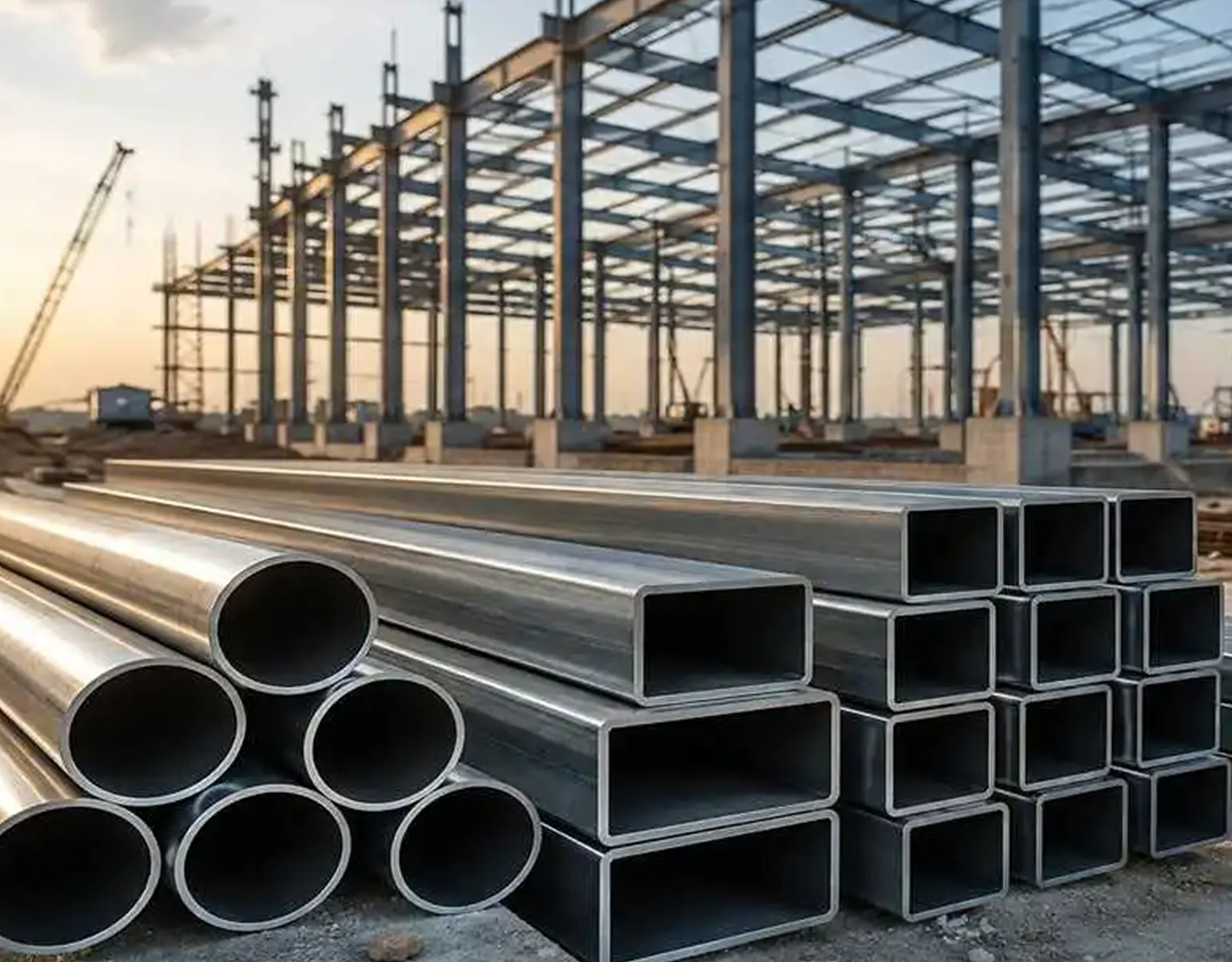
As modern construction moves towards faster execution, efficient design, and long-term performance, Structural Steel Tubes and Black Hollow Section Tubes have become an important choice for builders, engineers, contractors, and fabricators.
Read More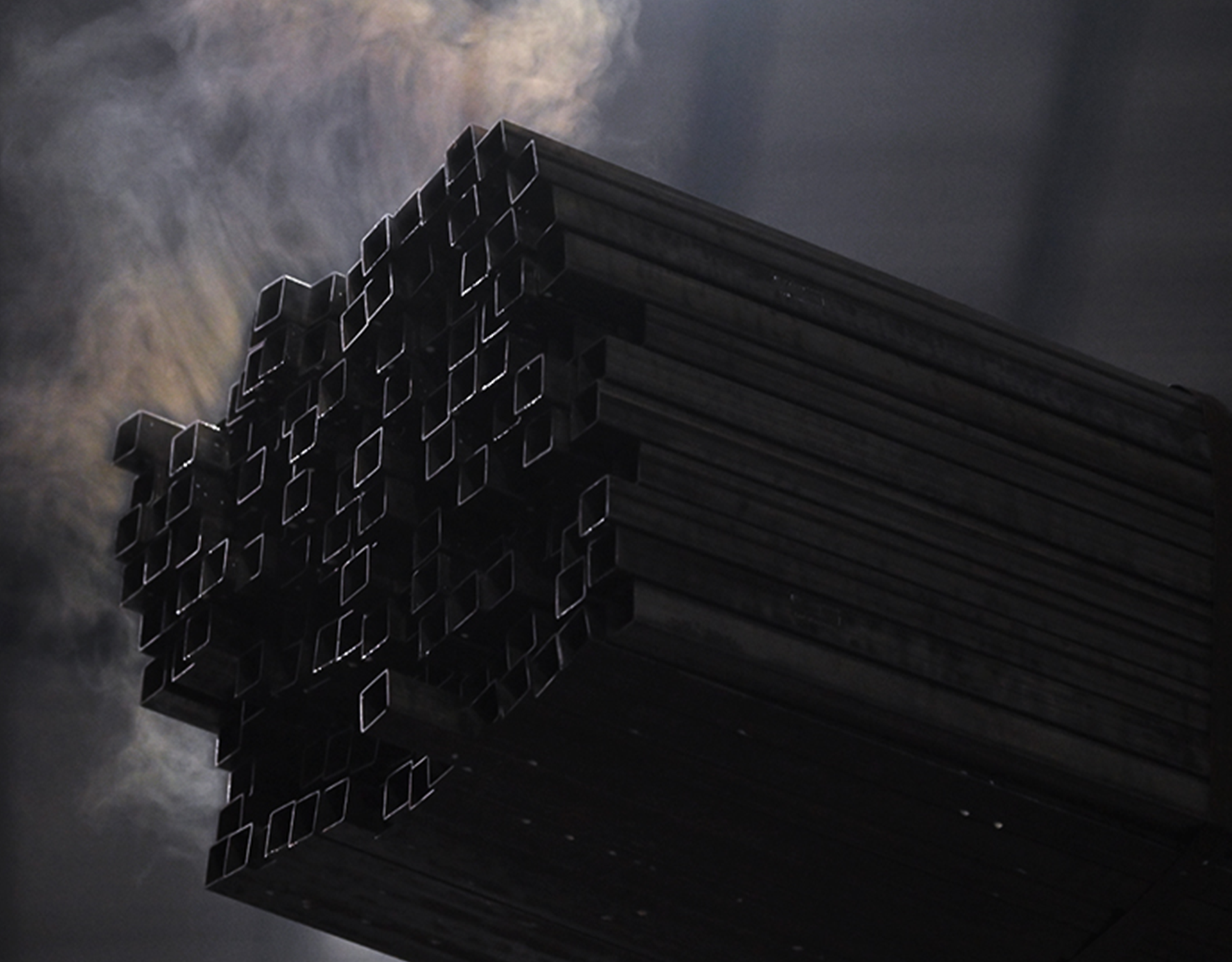
Steel pipes play a critical role in modern infrastructure, construction, manufacturing, and transportation. Among the various types of steel pipes available in the market, ERW steel pipes have gained significant popularity due to their strength, precision, cost-effectiveness, and versatility. At Sambhv Steel Tubes Limited , we manufacture high-quality ERW Steel Tubes & Pipes designed to meet the demanding requirements of diverse industries. In this article, we explore what ERW steel pipes are, how they are manufactured, their benefits, and where they are commonly used.
Read More
Steel has always been more than just a material. It is strength you can rely on, the silent force behind India's growth, and the foundation for every ambitious project we take pride in.
Read More
Steel is everywhere - in our roads, railways, homes, and industries. But when it comes to infrastructure, one product quietly plays a bigger role than most: the ERW pipe (Electric Resistance Welded pipe).
Read More
At Sambhv, we believe that every dream can be shaped into reality. Our name itself means "possible", and our guiding philosophy "Sab Sambhv Hai" reflects that belief.
Read More
When you think about steel, you think about strength. Bridges, highways, railways, skyscrapers, and even the everyday structures around us all rely on one simple promise - that the steel inside them will hold strong, perform consistently, and stand the test of time.
Read More